If you walk your dog in grass, brush, woods, or even a backyard with tall growth, a quick tick check should be part of your routine. It only takes a few minutes, but it can help you spot a tick before it stays attached for long.
The good news is that you do not need a complicated process. Once you know where ticks like to hide and how to scan your dog efficiently, checking becomes a simple habit you can do every time you come home.
Key takeaways
- Check your dog for ticks after walks in grassy, wooded, or overgrown areas.
- Use both your hands and your eyes. Ticks can be tiny and easy to miss.
- Focus on high-risk hiding spots like the ears, toes, collar area, groin, armpits, and tail base.
- If you find a tick, remove it calmly with clean tweezers or a tick-removal tool.
- Call your vet if your dog seems unwell, the skin becomes irritated, or you are not confident removing the tick yourself.
Why daily tick checks matter
Ticks are one of those problems that are easy to ignore until they are not. Dogs pick them up during ordinary outdoor time, especially in spring and summer, but depending on where you live, risk may continue well beyond that.
A daily dog tick check matters for two reasons.
First, it helps you catch ticks before they stay attached for long. Second, it helps protect both your dog and your household, because crawling ticks can come inside on fur and clothing.
Even if your dog is on prevention, it is still smart to check. Prevention lowers risk, but it does not replace a post-walk inspection.
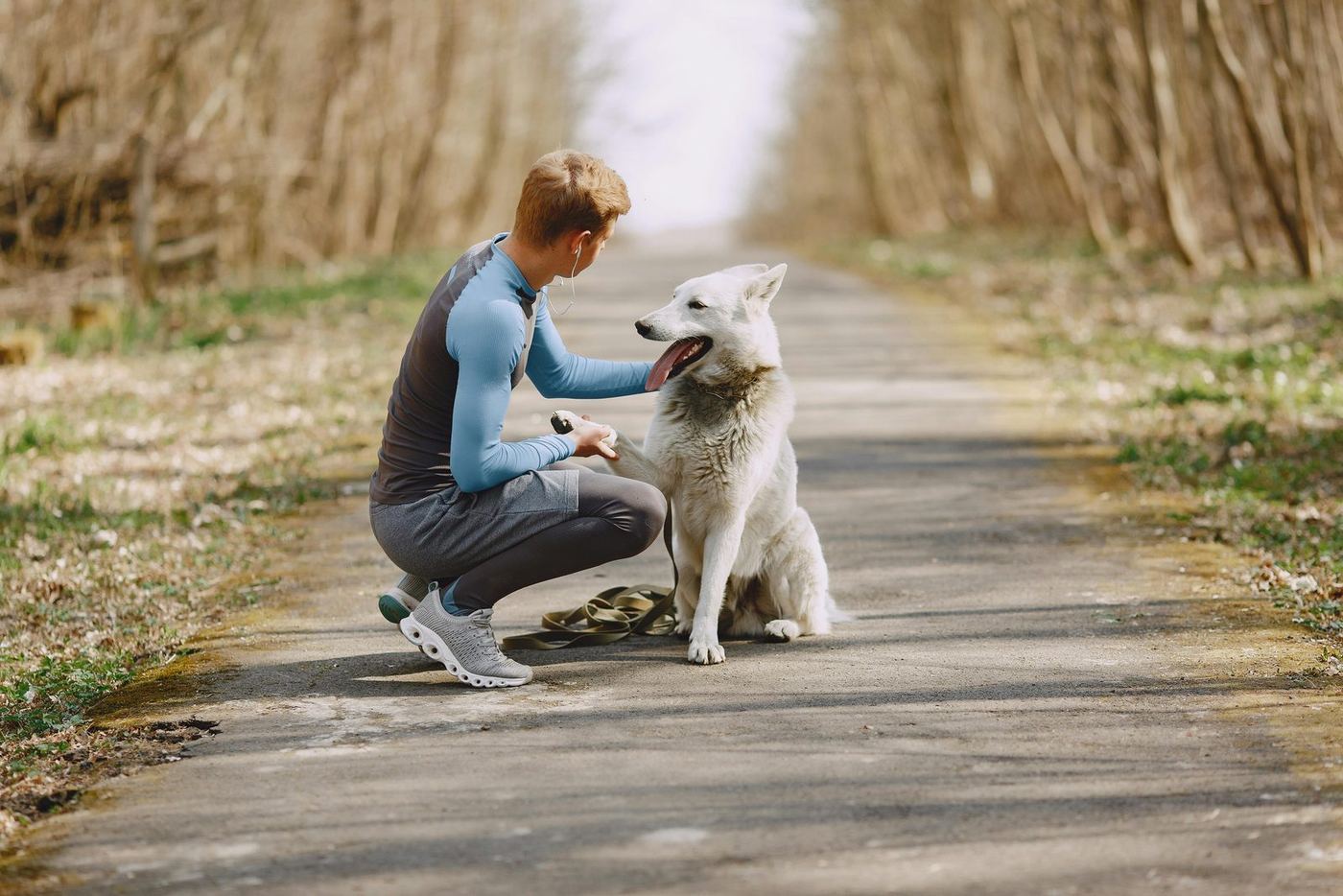
A quick post-walk check is easiest before you head inside and before your dog settles in for the evening.
What does a tick feel like on a dog?
Before you can spot one quickly, it helps to know what you are looking for.
A tick may feel like:
- a small bump on the skin
- a hard, smooth nub under the fur
- a round or oval lump attached close to the skin
Tiny ticks can be much easier to feel than to see, especially on dogs with thick, curly, dark, or double coats. That is why the best tick check uses both touch and visual inspection.
How to check a dog for ticks after a walk
This is the simplest routine for most dog owners.
1. Start at the door
Do the check as soon as you get home. Do not wait until later in the evening when you are distracted or your dog has already jumped on the couch.
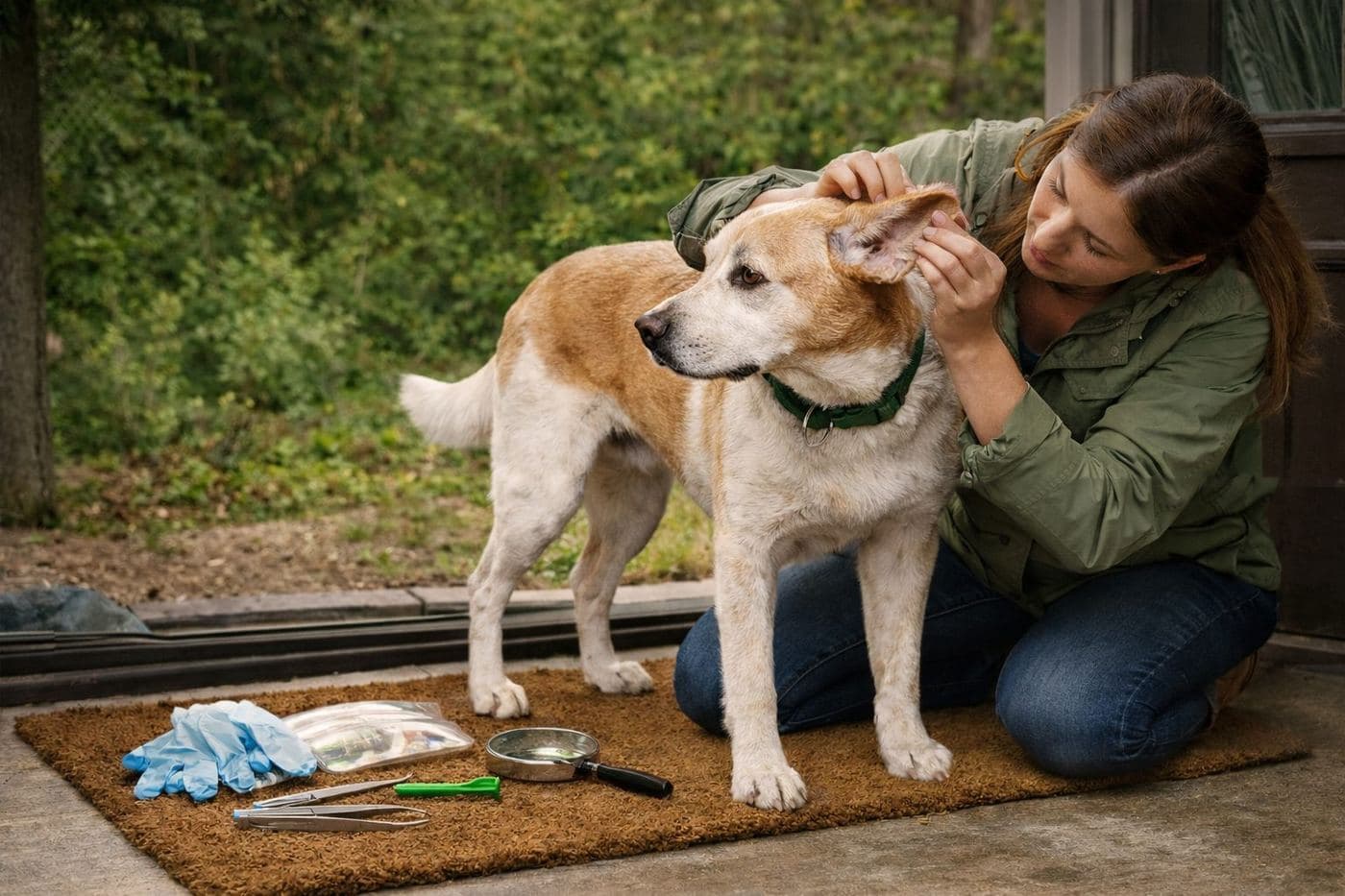
Keep a small tick-check station near the entrance with:
- a towel
- a flea comb or fine comb
- clean tweezers or a tick tool
- gloves
- a small container or zip bag
- antiseptic or pet-safe cleaning supplies
2. Run your hands over the whole body
Use slow, steady passes from head to tail. You are feeling for bumps, scabs, or anything unusual.
Start at the head, move down the neck and shoulders, then across the chest, back, sides, belly, and legs. This first pass usually catches the obvious problem areas.
3. Part the fur when something feels off
If you notice a bump, stop and look closely. Separate the fur and inspect the skin underneath. Good lighting helps a lot here, especially with long-haired dogs.
4. Use a comb for dense coats
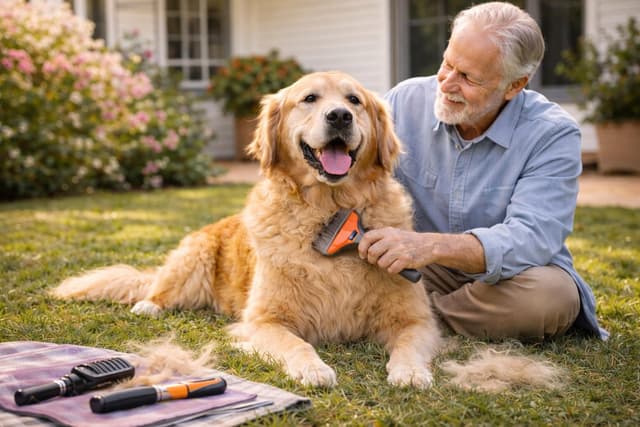
If your dog has a thick coat, use a flea comb or fine comb after the hand scan. Comb in small sections, especially around the neck, chest, ears, and feathering.
5. Check the common tick hiding spots
This is the part many people rush. Slow down here. Ticks prefer protected, less-visible places.
7 places to inspect during a dog tick check
| Body area | Why ticks hide there | What to look for |
|---|---|---|
| In and around the ears | Warm, folded, easy to miss | Small bumps, scratching, head shaking |
| Around the eyelids and face | Thin skin and close contact with brush | Tiny attached specks near the skin |
| Under the collar | Protected space with less airflow | Bumps hidden under straps or tags |
| Under the front legs | Warm folds and friction zones | Attached ticks in the armpit area |
| Between the toes | Hidden, sheltered, hard to spot | Licking, chewing, limping, small dark bumps |
| Groin and between the back legs | Warm and moist | Ticks close to thin skin |
| Around the tail and tail base | Dense fur and limited visibility | Ticks tucked under the tail or at the base |
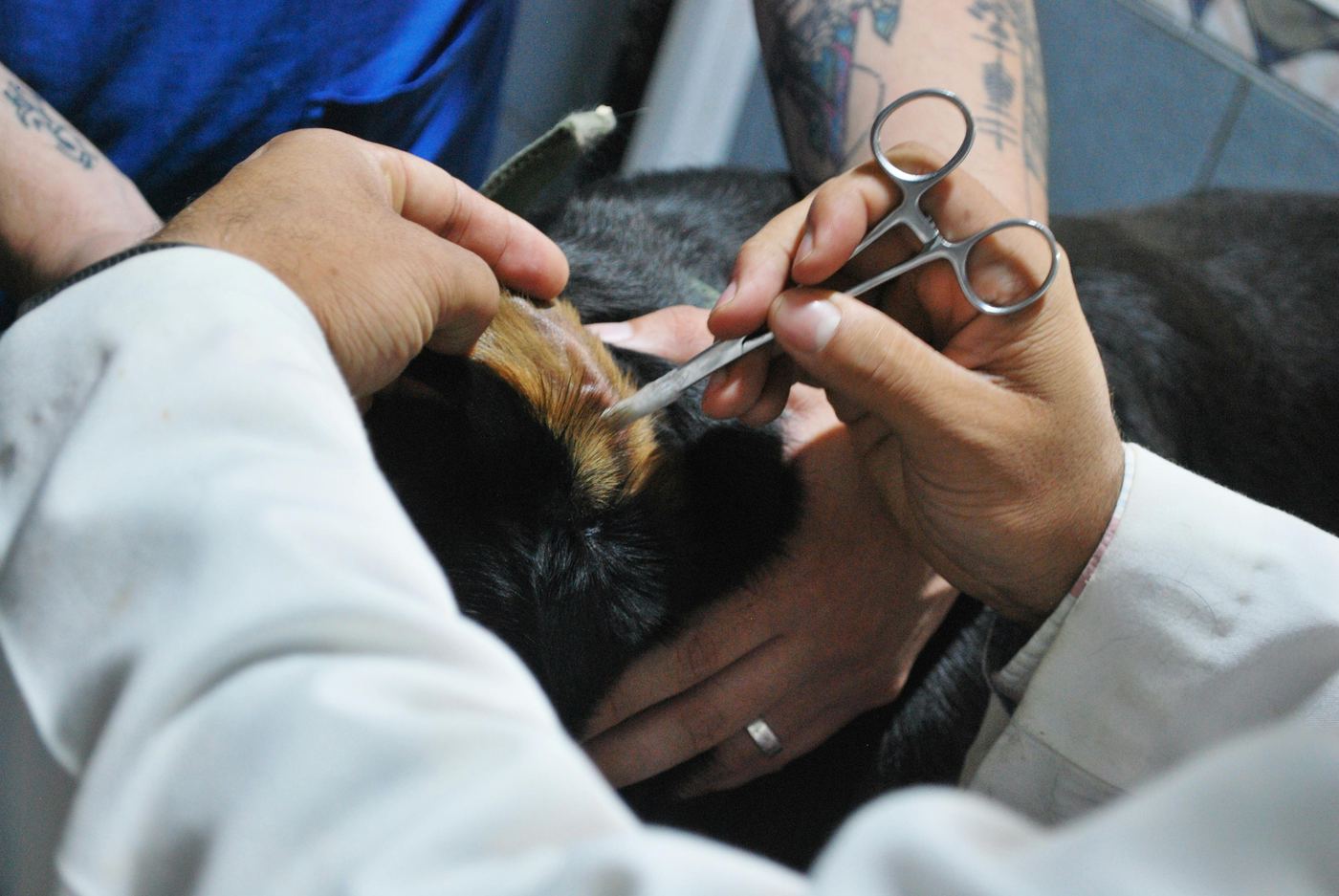
The ears and the skin around them are easy to miss, which makes them one of the first places to inspect carefully.
Where do ticks hide on dogs most often?
If you want the shortest possible answer, start here:
- ears
- face
- under the collar
- armpits
- between the toes
- groin
- tail base
These are the first places I would check after any walk through grass or brush.
If your dog has long fur, also check:
- feathering on the legs
- the chest
- the belly fringe
- any matted spots where a tick could hide
A 3-minute post-walk tick check routine
If you want a realistic habit you will actually keep up with, use this:
Minute 1: Head and neck
Check the ears, around the eyes, the chin, and under the collar.
Minute 2: Front half
Run your hands over the shoulders, chest, underarms, and front legs. Spread the toes.
Minute 3: Back half
Check the belly, groin, inner thighs, tail base, and back paws.
That is it. A short, repeatable system is better than a perfect routine you only do once in a while.
What to do if you find a tick on your dog
Try not to panic. Most of the time, the next step is straightforward.
If the tick is crawling in the fur
Remove it before it attaches. Use tissue, gloves, tweezers, or a tick-removal tool. Dispose of it safely and continue checking the rest of the body.
If the tick is attached
Use clean tweezers or a tick-removal tool.
- Wear gloves if you have them.
- Grasp the tick as close to the skin as possible.
- Pull upward slowly and steadily.
- Do not yank, crush, or twist aggressively.
- Clean the area after removal.
- Put the tick in a sealed container or bag in case your vet wants to identify it later.
Avoid folk remedies that waste time or irritate the skin. If you are unsure, call your vet and let them remove it.
Can dogs get ticks even on prevention?
Yes, they can.
Preventive products reduce risk and can be extremely helpful, but they do not mean you should stop checking your dog. A dog can still pick up ticks during a walk, and you may still find crawling or attached ticks during a routine scan.
That is why the best approach is layered:
- use prevention recommended by your veterinarian
- check your dog after outdoor time
- keep grass and brush trimmed when possible
- wash dog bedding regularly
- inspect your own clothing and shoes too
When to call the vet after a tick bite
Call your veterinarian if:
- you cannot safely remove the tick
- the skin becomes red, swollen, or painful
- part of the tick appears to remain embedded
- your dog seems tired, feverish, stiff, or reluctant to move
- your dog starts limping
- your dog loses appetite
- you notice unusual behavior after a recent tick exposure
This article is general education, not a diagnosis. If your dog seems sick, contact your veterinarian promptly.
Signs your dog may have picked up more than one tick
Sometimes the first tick you find is not the only one. Do a second full-body scan if your dog:
- walked through tall grass
- rolled in brush
- hiked off trail
- has a dense or double coat
- has a history of coming home with burrs, seeds, or debris in the fur
A lint roller can also help catch loose debris on short-coated dogs before you begin the hand check, though it should not replace a real inspection.
How to make tick checks easier on long-haired dogs
Long coats make tick checks harder, but not impossible.
Try these habits:
Brush before the season gets busy
A well-maintained coat is easier to inspect than a matted one.
Use good light
Natural daylight or a bright entryway lamp makes a big difference.
Check in sections
Do not try to scan the whole coat at once. Divide your dog into head, front, middle, and back.
Keep feathering tidy
Talk to your groomer if your dog gets heavy fur between the toes, around the ears, or under the tail.
Make it part of calm handling
Pair the check with praise, treats, or a mat by the door so your dog learns to stand still.
Tick check mistakes dog owners make
A lot of missed ticks come down to the same habits.
Only checking the back
Ticks often hide in folds, creases, and overlooked spots.
Skipping the paws
Between the toes is one of the easiest places to miss.
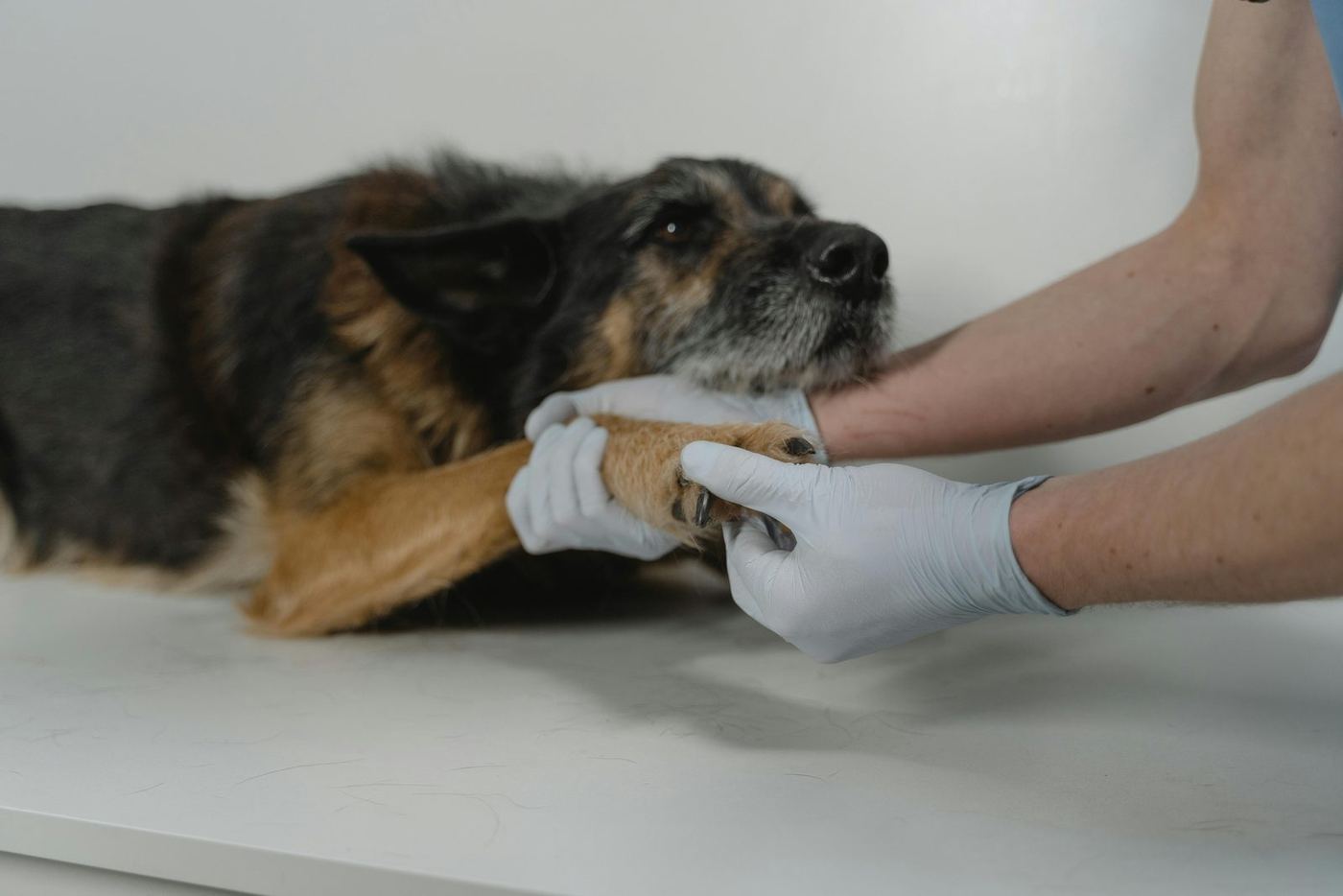
Paws deserve a slow check, especially between the toes where ticks and other debris can hide after a walk.
Assuming prevention means zero risk
Prevention matters, but it does not replace a visual and hands-on check.
Waiting until bedtime
By then, a crawling tick may have had more time to settle in or drop into your home.
Rushing through thick fur
Dense coats need a little extra time and often a comb.
Tick checks vs. foxtails: why both matter in spring
If you hike or walk your dog in dry grassy areas, spring and early summer are not only about ticks. They are also prime time for foxtails and other barbed grass awns.
That means your post-walk routine should do double duty:
- look for ticks attached to the skin
- look for foxtail seeds in the coat, ears, paws, and around the face
FAQ
How often should I check my dog for ticks?
If your dog spends time outdoors in grassy, wooded, brushy, or overgrown areas, check after each outing. A quick daily check is a smart habit during higher-risk months.
Where do ticks hide on dogs?
The most common places are the ears, around the face, under the collar, under the front legs, between the toes, around the groin, and near the tail base.
What is the easiest way to find ticks on dogs?
Use your hands first to feel for bumps, then part the fur and inspect the skin. On thick coats, a fine comb makes the check easier.
What should I do if I find a tick on my dog?
Remove it calmly with clean tweezers or a tick-removal tool, clean the area, and monitor your dog. Call your vet if you are unsure, if the area becomes irritated, or if your dog seems unwell afterward.
Can my dog bring ticks into the house?
Yes. Ticks can crawl on fur and gear before attaching, which is one reason a post-walk check matters for both your dog and your home.
Conclusion
Knowing how to check a dog for ticks after a walk is one of the simplest habits that can make a real difference during spring and summer. You do not need a perfect setup or a long routine. You just need a few minutes, good light, and a habit of checking the right places every time your dog comes in from higher-risk areas.
Start with the ears, paws, collar area, groin, and tail base. Use your hands, slow down around hidden spots, and deal with any tick calmly and safely. Once you do it a few times, a dog tick check becomes second nature.